
Flexible Infrastructure: Commercial Planters for Adaptable Outdoor and Indoor Spaces
Landscape architects and developers are specifying planters with custom details that allow them to address their clients' changing preferences and needs.
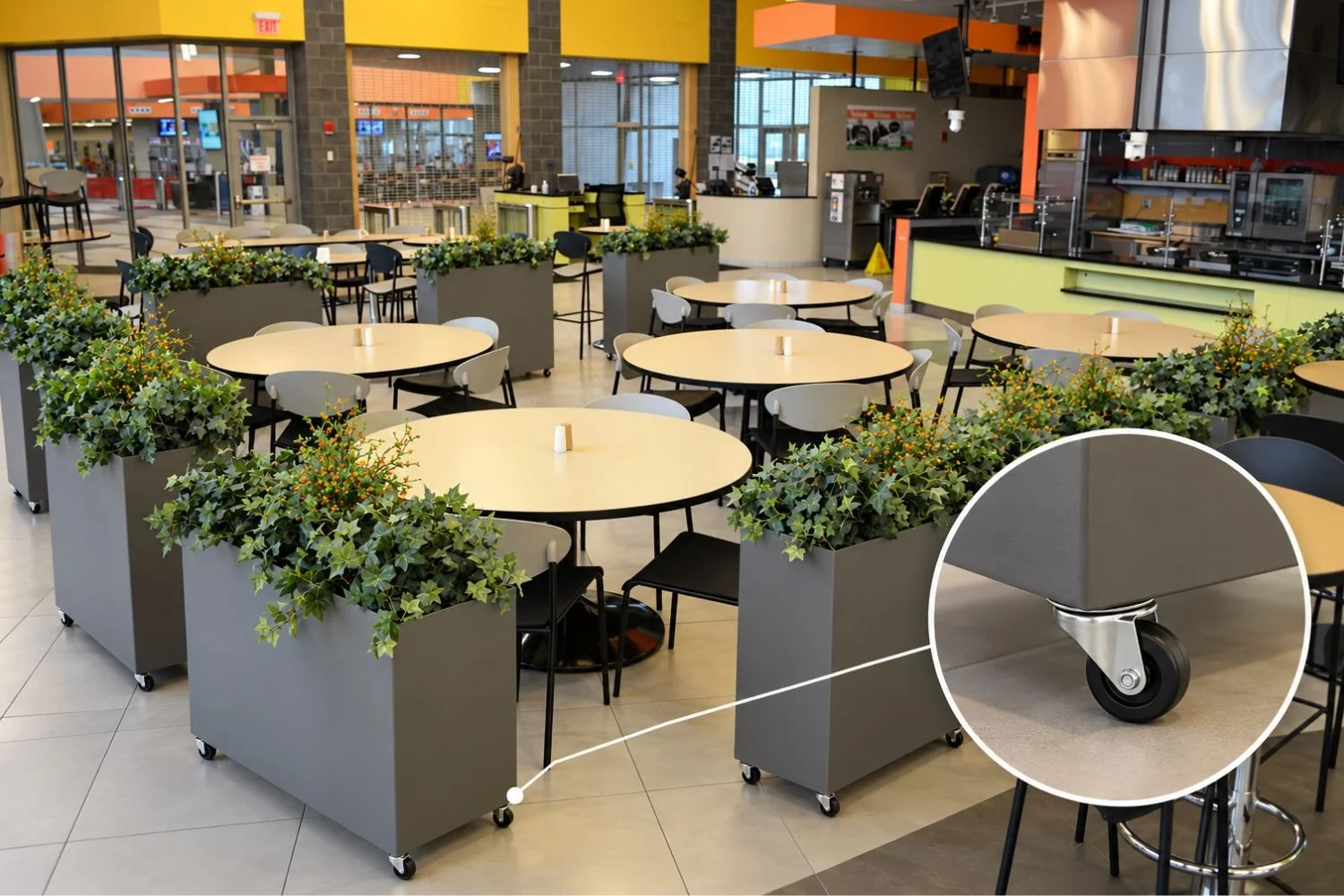
Custom details, such as forklift slots for sidewalk planters or casters on cafeteria planters for a university campus, mean planters can be moved so layouts in public spaces aren’t permanent.
What features make commercial planters adaptable for changing spaces?
Successfully incorporating custom features, like those highlighted below, enable commercial planters to adapt to changing needs.
Casters for smaller and mid-sized planters
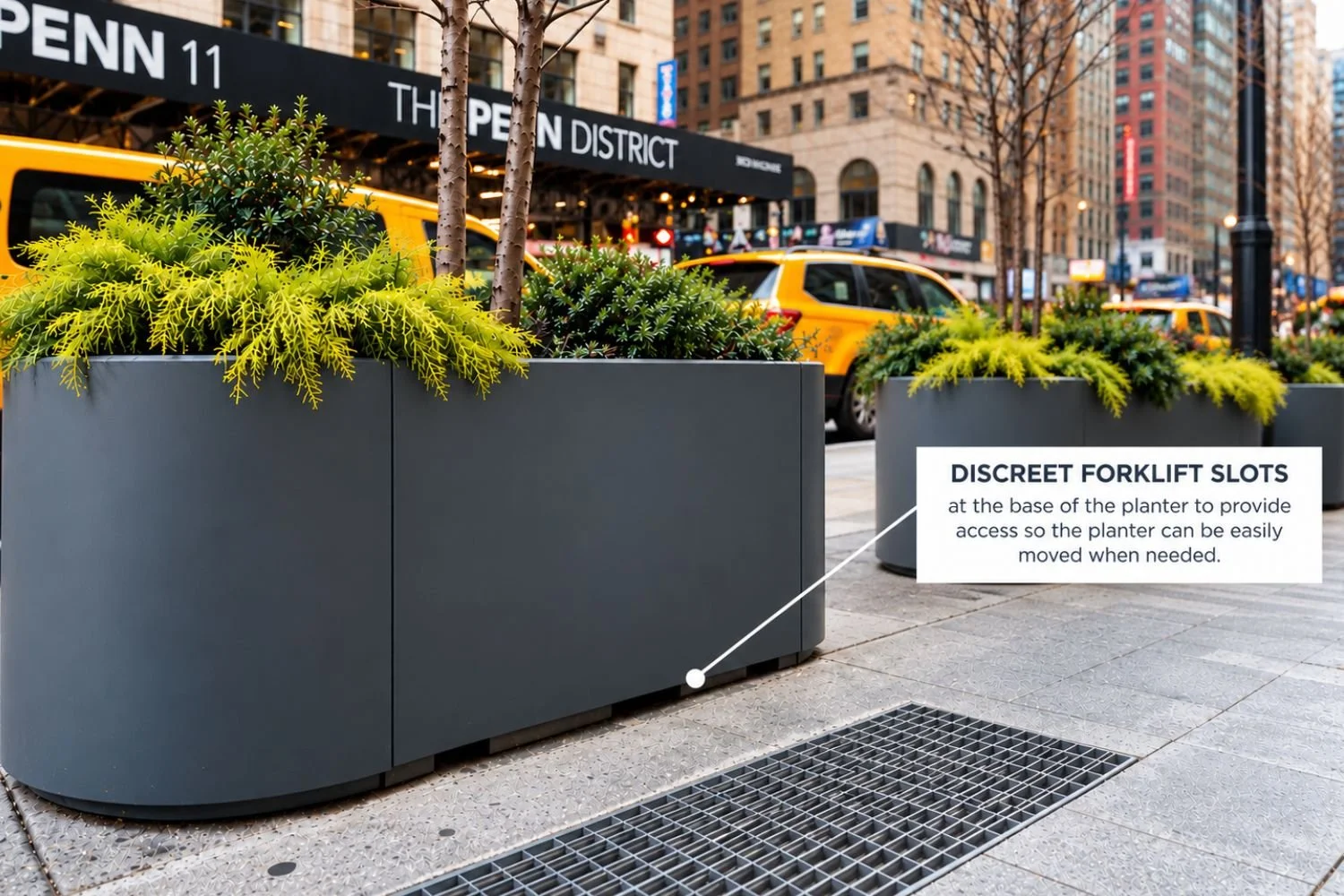
Forklift slots for large-scale installations
Modular planters
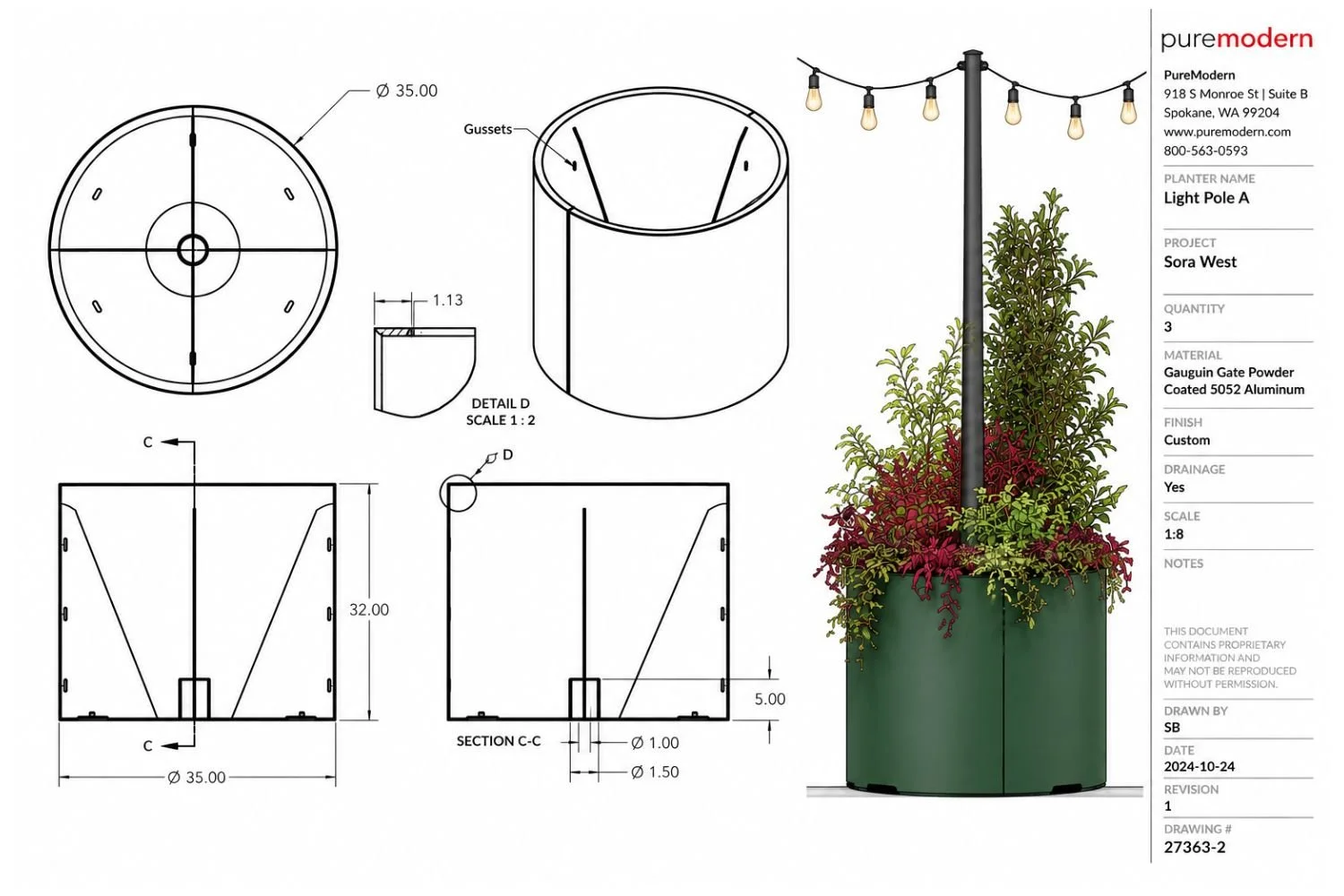
Planters designed with integrated sleeves for light poles
Tree tie-down systems where needed for healthy growth and stability
Durable commercial-grade materials like marine-grade aluminum and Corten weathering steel that will hold up to being knocked into and moved about
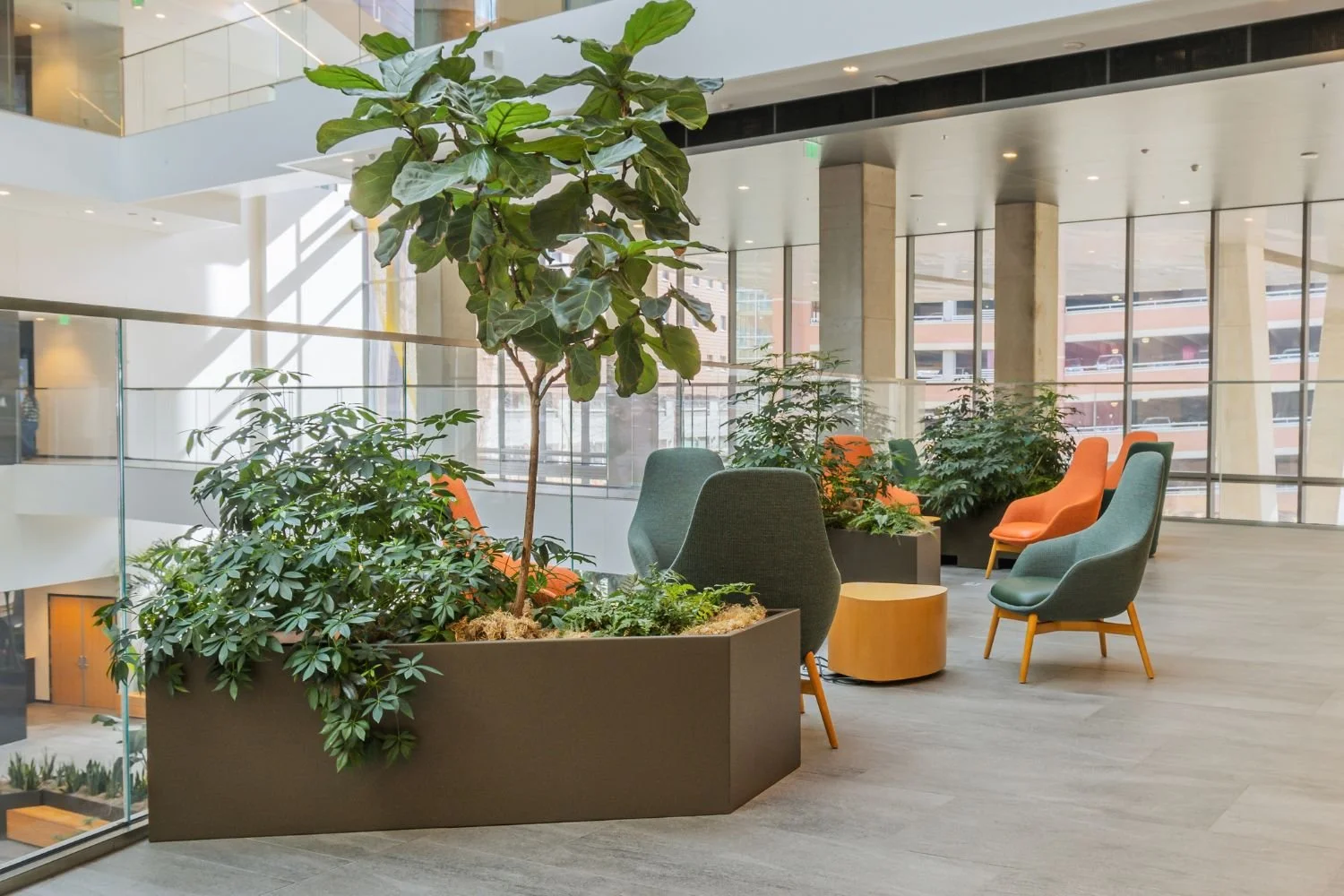
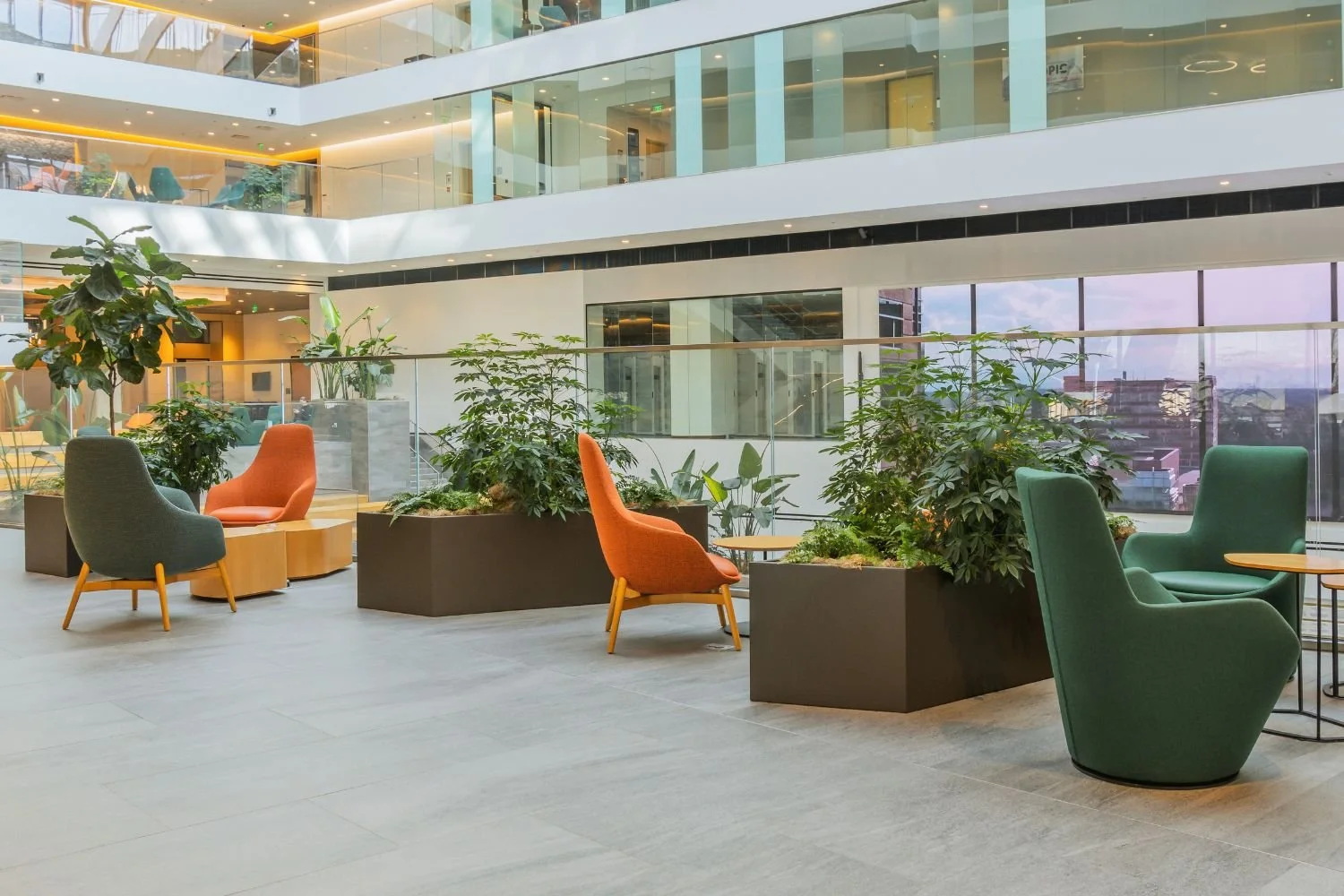
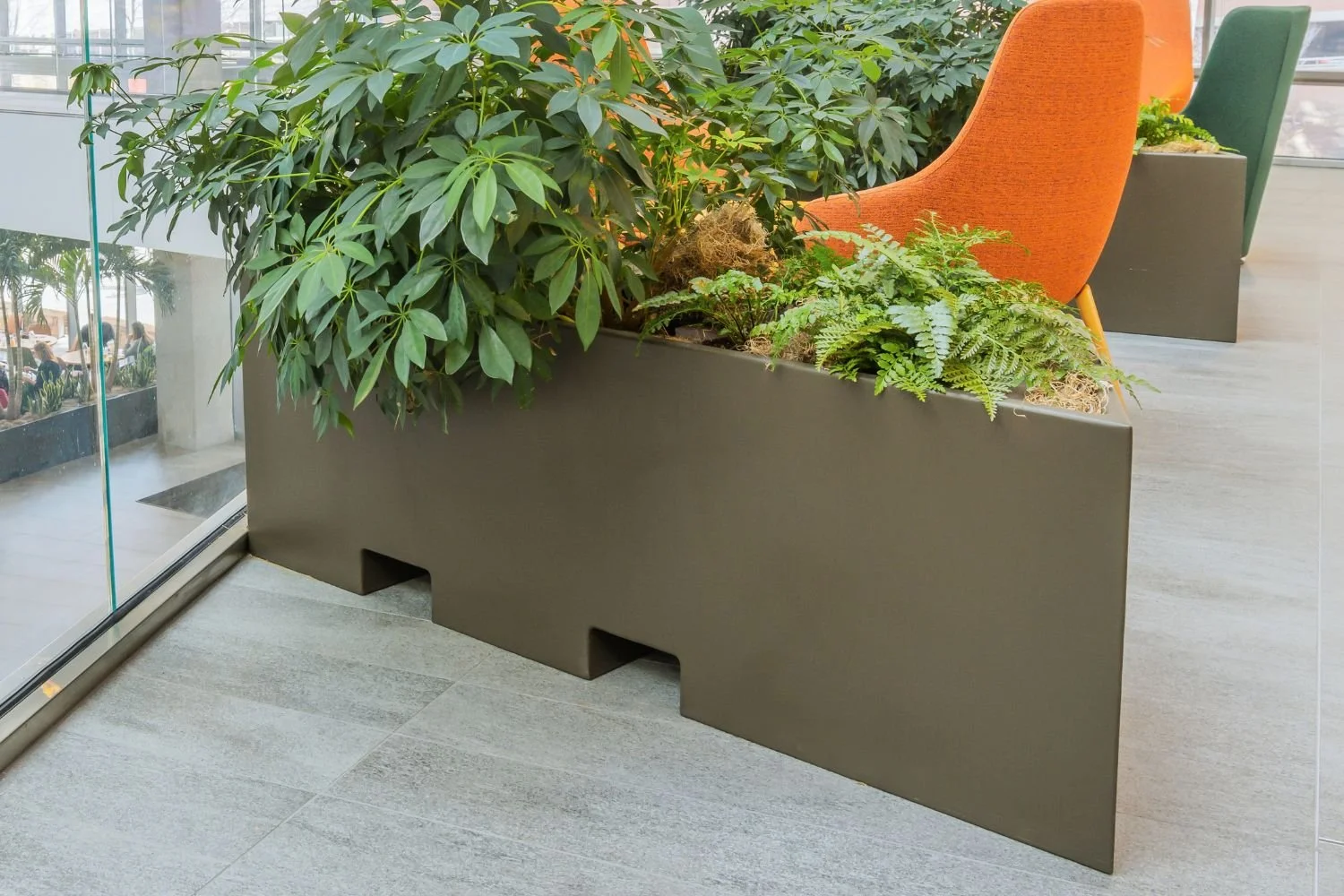
Scroll through the images below to see an example of indoor planters with forklift slots for ease of mobility in the Anschutz Health Sciences Building in Aurora, CO
A few highlights from this project:
Large-scale custom planters were integrated throughout this seven-story interior atrium at the Anschutz Health Sciences Building in Aurora, CO to help organize circulation, define gathering areas, and create a more welcoming pedestrian environment.
In the lobby, large custom rectangular planters define walkways and carve out seating areas, while uniquely shaped planters on the upper floors add visual interest against expansive glass walls.
To support future layout flexibility, the planters were also custom-designed with openings to accommodate hand-pallet jack access for easier movement when needed.
Commercial Spaces Need to Evolve Faster Than Ever
Today’s commercial environments are rarely static:
Offices are reconfiguring for hybrid work.
Mixed-use developments and amenity spaces are constantly adapting to evolving tenant needs.
Plazas and campus layouts must accommodate changing pedestrian flow, events, and multi-use programming.
Hospitality spaces need to support events, dining, and seasonal programming.
Streetscapes must balance pedestrian flow, safety, and public use.
In many cases, these environments need to change just as often and quickly as the businesses and communities that use them. This trend has significantly expanded the role of commercial planters. They are no longer just decorative accessories. We’re seeing our clients use planters as flexible infrastructure—helping to shape, organize, and adapt spaces without demolition, reconstruction, or permanent changes. For sidewalks, rooftops, and public spaces, flexibility is now just as essential as accessibility and safety.
Why Flexibility Matters in Modern Design
Designers and property owners are prioritizing adaptable spaces since multi-purpose spaces are good for their bottom line. Outdoor dining areas are now multi-use environments that must quickly adapt for changing requirements and varied circulation patterns. The challenge is that many traditional site elements are permanent. Walls, curbs, fixed barriers, and hardscape changes can be expensive and difficult to modify later.
Design teams need solutions that are:
Durable
Safe
Functional
Adaptable
Movable commercial planters help bridge that gap because teams can quickly adapt layouts without expensive hardscape modifications or disruptive reconstruction.
6 Features That Can Make Commercial Planters More Flexible
-
Large planters don’t need to become fixed obstacles. With the right engineering, they can be repositioned efficiently when needed.
Options may include:
Casters for smaller and mid-sized planters
Forklift slots for large-scale installations
See a Real Project Example at a University Campus with Movable Commercial Planters
📍 SUNY Cortland
At SUNY Cortland, custom commercial planters were designed with integrated casters to support easier movement and campus layout flexibility over time. The movable planter systems help the university adapt outdoor spaces as needs evolve without construction delays or any major disruption.
-
Movable streetscape planters allow cities, campuses, and hospitality properties to respond more easily to changing pedestrian flow throughout the year.
Sidewalk and streetscape planters are now commonly used to:
Define outdoor dining areas
Guide pedestrian flow
Separate traffic from people
Support seasonal activations
Introduce greenery into dense urban settings
Unlike permanent barriers, planters can often be reconfigured or relocated as needs evolve.
See How Flexible Planters Guide Pedestrian Flow & Add Structure to this Downtown Renovation Project
📍 Penn Station – New York City
-
This type of integrated solution is ideal for hotels, restaurants, plazas, and amenity decks where lighting, ambiance, and functionality all need to work together.
Some planter systems can incorporate lighting directly into the design.
Benefits include:
Reducing the need for separate poles or fixtures
Supporting nighttime use
Improving safety
Enhancing ambiance
This is especially valuable in plazas, sidewalks, hospitality spaces, and amenity areas where both aesthetics and functionality matter.
For Hotel West & Main in Conshohocken, PA, PureModern manufactured custom powder-coated aluminum planters designed with integrated sleeves for light poles.
Installed on the outdoor patio, these planter systems combine greenery, lighting, and spatial definition into one coordinated solution.
The project included ten custom planters in Green Leaf Gloss finish, engineered to support lighting infrastructure while maintaining a refined high-end hospitality aesthetic.
-
Flexibility isn't always about moving a planter. Sometimes it's about designing a planter system that can evolve as the space changes.
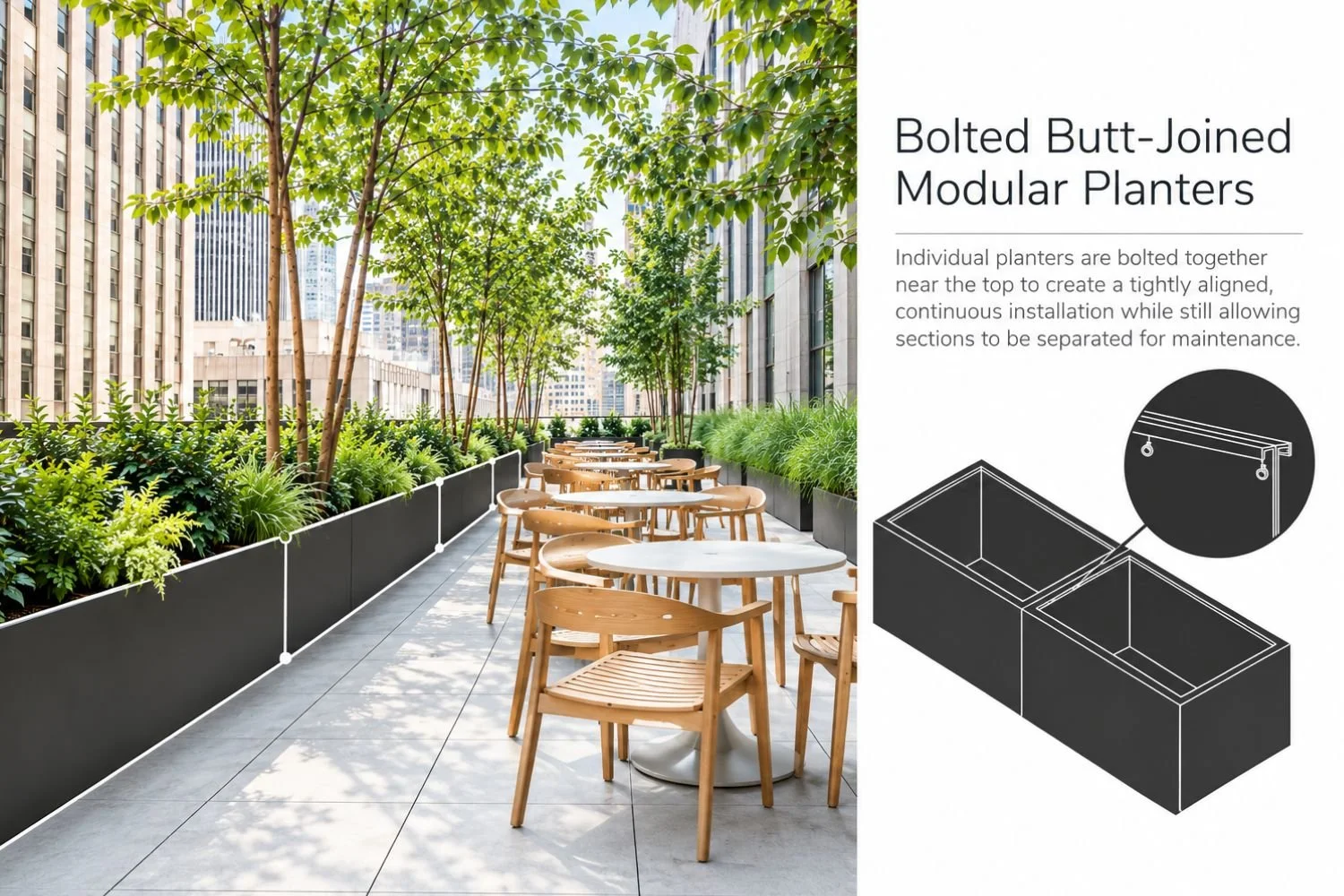
Bolted butt-joined planter systems allow long planter runs to be fabricated as individual modules that are securely fastened together during installation. If future renovations, roof maintenance, or layout changes require access, the planter sections can be unbolted and separated rather than demolished or cut apart.
This approach offers several advantages for commercial projects:
Simplifies transportation and rooftop installation
Allows individual sections to be removed or replaced if necessary
Provides easier access for future roof maintenance
Supports phased renovations and future layout changes
Maintains the appearance of one continuous planter system
📍 Rockefeller Center Rooftop – New York, NY
At Rockefeller Center, the design team wanted the rooftop perimeter planter system to appear as one continuous architectural element while retaining the flexibility to separate individual sections in the future if roof access or maintenance became necessary.
PureModern fabricated custom bolted butt-joined aluminum planter edging that creates the appearance of a seamless rooftop planter while allowing the modules to be unbolted if needed. This approach also helped protect the rooftop by avoiding a permanently fixed planter system that could complicate future roof work.
The result is a planter system that balances long-term flexibility with a clean, integrated architectural appearance.
-
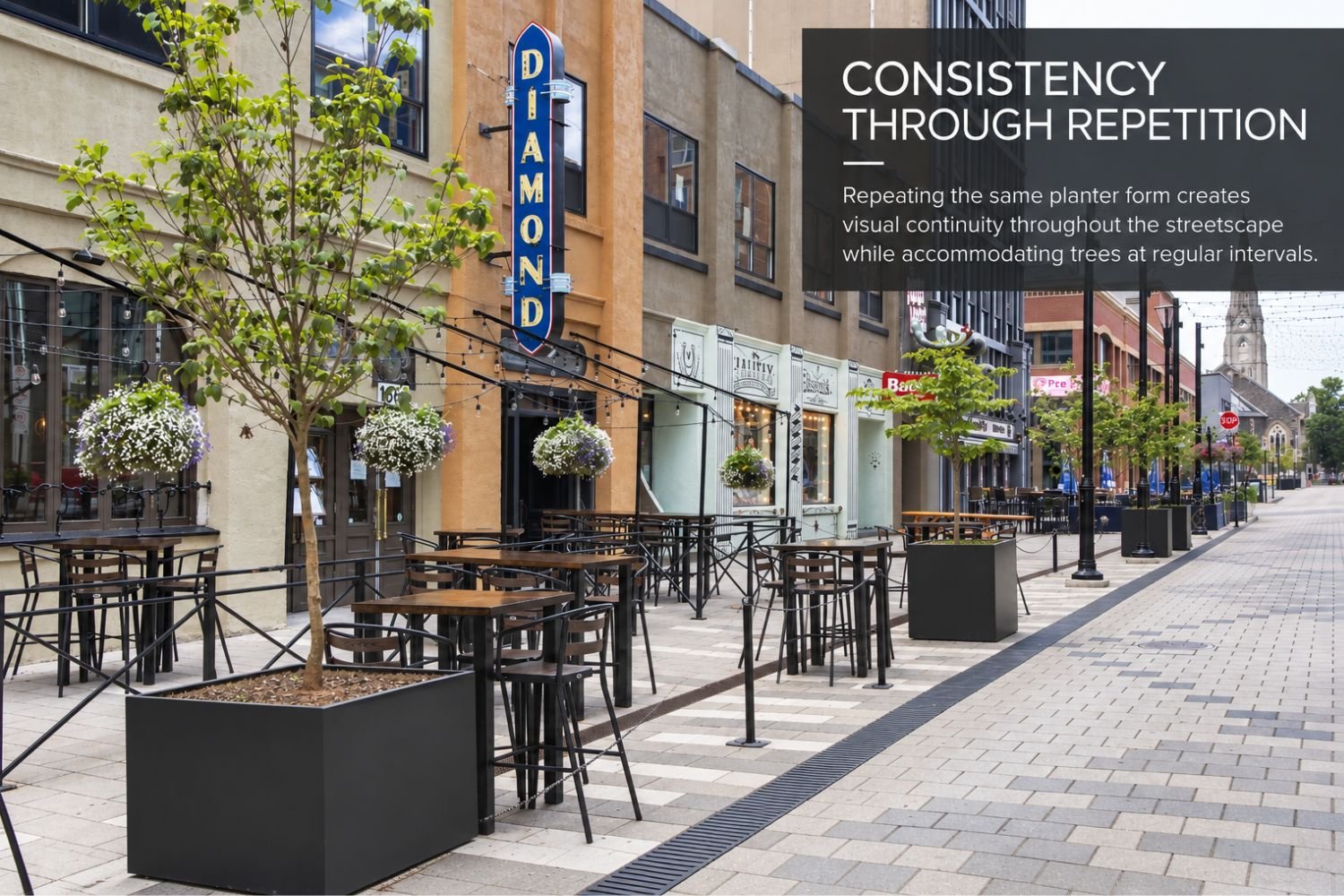
Flexible planter systems can be designed in repeatable modules that allow layouts to evolve over time. Should the layout expand, more can be ordered in the future, if necessary.
Flexible planter systems can be:
Grouped together
Spaced apart
Rearranged seasonally
Expanded in future phases
This supports changing tenant needs, events, and phased development plans.
📍 Halifax, Nova Scotia, Canada
In this project to renovate a public area, PureModern planter systems were installed along the street to help define pedestrian zones, create separation from traffic, and bring greenery into the urban environment.
The result is a streetscape solution that provides structure without permanence.
-
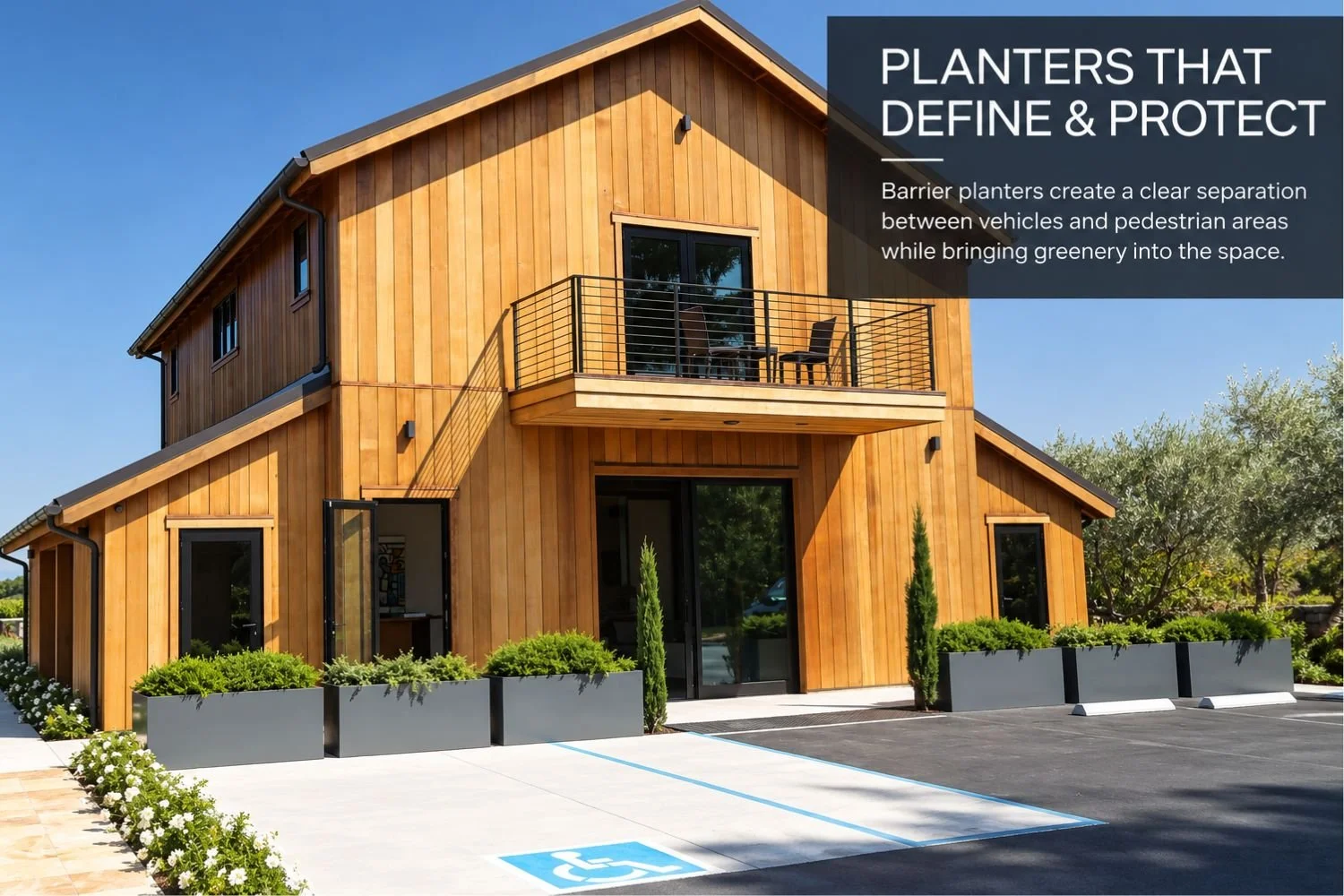
Planters are also increasingly used as flexible barriers.
They can help provide:
Vehicle separation
Pedestrian protection
Visual boundaries
Streetscape organization
This creates safer environments without relying exclusively on fixed infrastructure.
📍 Fortunati Vineyards in Napa Valley
At Fortunati Vineyards in Napa Valley, planters were strategically positioned to define the boundary between the parking area and ADA entrance doors, creating clear visual separation and safer pedestrian movement while preserving the property’s elegant, welcoming character without relying on permanent barriers.
👉 View Project
Common Mistakes When Designing Flexible Planter Systems
Designing adaptable planter systems involves more than adding casters or forklift slots. Long-term flexibility should be considered early in the design process to minimize costly revisions, operational challenges, and maintenance issues later.
Choosing Materials That Are Too Heavy
Not every project benefits from the heaviest material available. For rooftops, terraces, and elevated amenity decks, material weight can affect structural loading, transportation, and installation.
Selecting a lighter-weight material, such as marine-grade aluminum, can provide greater flexibility while still delivering long-term commercial performance.
Overlooking Future Mobility Requirements
One of the most common mistakes is designing planters as permanent elements when the space may need to evolve.
If layouts may change over time, consider incorporating features such as:
Integrated casters
Forklift slots
Hand-pallet jack access
Modular planter construction
Planning for mobility early is typically far easier than trying to modify planters after installation.
Underestimating Drainage Requirements
Whether the project is on a rooftop, streetscape, or interior commercial space, proper drainage should never be an afterthought.
Poor drainage can affect:
Plant health
Irrigation performance
Roof assemblies
Adjacent paving
Long-term maintenance
Drainage strategies should be coordinated with planting design, irrigation, and the surrounding site conditions before fabrication begins.
Selecting Planters That Are Too Small for Mature Plant Material
Flexible spaces still require healthy landscapes.
When specifying trees or large shrubs, planter dimensions should account for mature root growth—not just plant size—at installation.
Proper sizing helps support healthier plants while reducing the likelihood of future replacement or redesign.
Failing to Engineer for Repeated Movement
Planters that are intended to be moved regularly require different engineering than permanent installations.
Depending on the application, this may include:
Internal reinforcement
Additional structural bracing
Ballast for stability
Reinforced mobility systems
Durable commercial-grade materials that withstand repeated movement
Designing for movement from the beginning helps improve both safety and long-term performance.
Start Early to Ensure Design Flexibility
Many of these challenges can be avoided by discussing future operational needs during design development.
Understanding how a space may evolve over time allows a project team to select planter systems that support changing layouts, simplify maintenance, and continue performing long after installation.
When Movable Commercial Planters Are the Right Solution
Adaptable planter systems are especially useful in:
Sidewalk dining zones and streetscapes
Corporate campuses
Hospitality and hotels
Rooftop amenity decks and outdoor lounges
Universities
Retail and mixed-use developments
Public plazas
Transit hubs such as Penn Station
Design Considerations for Planters as Flexible Infrastructure
To maximize long-term flexibility, planning should begin early in the project process.
Important considerations include:
Weight vs. mobility
Access for pallet jacks or casters
Drainage and irrigation
Electrical needs for integrated lighting, conduit access, and planter-supported light poles—especially in hospitality patios, plazas, and rooftop environments
Durability for repeated movement
Seasonal storage or repositioning strategy
Elements being planted (e.g., large trees, faux plants, etc.)
PureModern’s Approach to Flexible Infrastructure and Commercial Planter Design
At PureModern, flexible planter design starts with understanding how the space may need to function not only today—but years from now.
That means asking practical planning questions such as:
Will the layout need to change for events?
Could future tenants want different uses?
Should units be movable or modular?
Does the space require lighting integration?
Are streetscape or safety requirements involved?
Solutions can incorporate:
Casters or pallet jack access
Modular layouts
Integrated lighting systems and planter-supported light poles that reduce clutter while improving ambiance and nighttime usability
Sidewalk and urban design requirements
Long-term durability
Tree tie-down systems where needed for healthy growth and stability
PureModern also supports collaboration and revisions before fabrication begins, helping align final products with architectural intent.
That process has been proven across urban streetscapes, campuses, hospitality environments, and major transit hubs.
Learn from Real Commercial Projects
Many of these topics are explored in PureModern's complimentary Lunch & Learn program for architects, landscape architects, designers, contractors, and project teams.
Rather than focusing on products, these working sessions examine real commercial projects and the design decisions behind them. Teams gain practical guidance on selecting appropriate materials, coordinating planter systems with surrounding construction, avoiding common specification challenges, and designing commercial planter systems that perform successfully over the long term.
Whether you're planning a rooftop amenity, mixed-use development, streetscape, corporate campus, or hospitality project, the goal is the same: helping teams make informed decisions earlier in the design process.
Build for the Future, Not Just for Today
Commercial spaces are no longer static.
Creating adaptable outdoor environments has become increasingly important for campuses, hospitality spaces, mixed-use developments, and urban projects.
From sidewalks and campuses to mixed-use developments, large movable planters offer a way to create structure, guide movement, improve safety, and introduce greenery while still allowing spaces to evolve for changing needs in the future.
PureModern helps clients design planter systems built not just for today’s layout—but for how the space will evolve to function in the months and years to come.
Design a Flexible Space that Lasts
Whether you’re planning a design project that involves a streetscape, campus, or hospitality environment, flexible planter systems can help that space live longer and adapt over time.
Frequently Asked Questions
Up to what size can a large commercial planter be moved?
It depends on engineering, material selection, and mobility features, such as forklift slots or pallet jack access.
Are sidewalk planters always permanent?
No. Many sidewalk planter systems are designed to be movable or reconfigurable.
Can planters replace barriers or bollards?
In some settings, planters can help create separation, visual boundaries, and traffic buffering while enhancing the aesthetic. Planters can be designed to replace barriers or bollards, but will not be certified.
What features make planters flexible?
Common features include modular sizing, mobility systems, durable construction, integrated lighting, scalable layouts, and forkslots.
What is the best material for movable commercial planters?
The best material depends on the application, but marine-grade aluminum is often preferred for movable commercial planters because it combines lightweight performance with excellent strength and corrosion resistance. Compared to heavier materials, aluminum is easier to transport, reposition, and install, making it well suited for rooftop amenities, hospitality spaces, campuses, streetscapes, and other commercial environments where layouts may evolve over time.
Can large commercial planters be relocated?
Yes. Large commercial planters can be designed for relocation by incorporating features such as concealed casters, forklift slots, hand-pallet jack access, or modular construction. The most appropriate solution depends on how frequently the planters will be moved, the surrounding site conditions, and the size and weight of the planter system.
Are modular planter systems a good choice for mixed-use developments?
Yes. Modular planter systems are commonly used in mixed-use developments because they provide flexibility for future renovations, phased construction, and changing tenant needs. They also simplify transportation and installation while allowing designers to create the appearance of long, continuous planter runs.
How are movable commercial planters installed?
Installation methods vary depending on the project. Some movable planters are delivered as complete units, while larger systems may be fabricated in modular sections and assembled on-site. Depending on the application, planters may incorporate concealed casters, forklift pockets, hand-pallet jack openings, or bolted butt-joined connections to support future relocation or maintenance.
What are forklift slots in commercial planters?
Forklift slots are reinforced openings built into the base of a planter that allow the unit to be safely lifted and relocated using a forklift. They are commonly specified for large commercial planters used in streetscapes, campuses, mixed-use developments, and hospitality environments where occasional repositioning or maintenance access may be required.
Are movable planters a good option for rooftop spaces?
Often, yes. Movable planters allow rooftop amenity spaces to adapt to changing tenant needs, seasonal programming, or future renovations. When designing rooftop planter systems, project teams should also consider structural loading, wind exposure, drainage, irrigation, and long-term maintenance. Lightweight materials such as marine-grade aluminum are frequently selected to help reduce rooftop dead loads while maintaining durability.
Can commercial planters support integrated lighting systems?
Yes. Commercial planter systems can be custom fabricated to accommodate integrated lighting, irrigation, signage, tree tie-downs, and other project-specific features. Coordinating these requirements during design development helps simplify installation and ensures the planter system integrates seamlessly with the surrounding landscape and architectural elements.
Why should flexibility be considered when specifying commercial planters?
Planning for flexibility during design development allows commercial spaces to adapt as needs change. Features such as modular construction, concealed mobility, forklift access, and lightweight materials can simplify maintenance, support future renovations, and extend the long-term value of a planter system without compromising the overall design.
